Data Center Networks

Data Center Networks OT Security


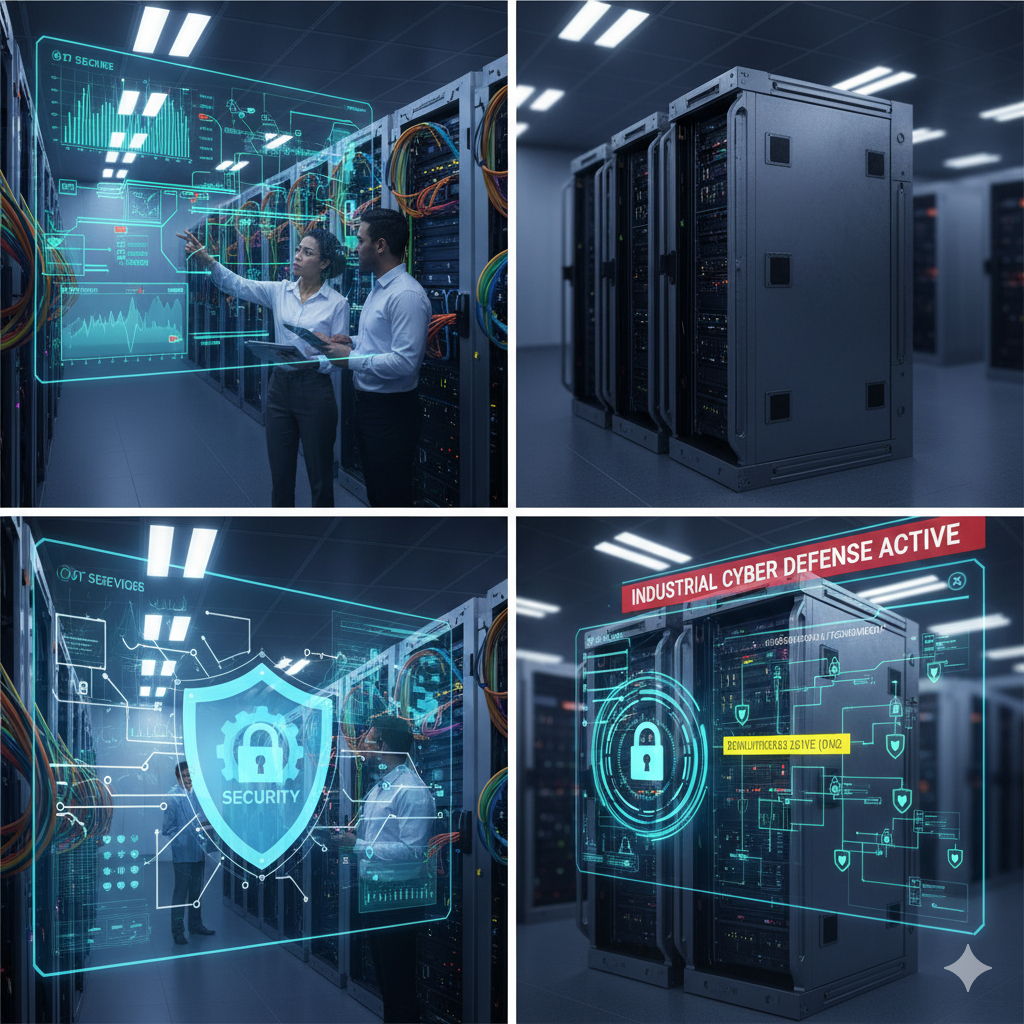
Modern data centers are mission-critical infrastructure. They house power, cooling, environmental controls, physical security, and operational systems required to maintain uptime, integrity, and safety.

With increasing threats such as credential theft, AI-powered reconnaissance, and lateral movement attacks, data center OT networks require robust Zero Trust protection.

Why Data Center OT Needs Zero Trust

Key Threats & Challenges


Why Zero Trust for DC-OT

  • Flat, implicitly trusted networks allow malware to move from IT systems or vendor laptops into PLCs, HMIs, and critical building or power systems.
  • High-impact targets mean that manipulating setpoints or breakers can trigger thermal issues, power loss, or major service outages.
  • Always-on remote operations for vendors, contractors, and NOC/SOC teams increase exposure; trust can no longer be based on network location.
  • Legacy and proprietary protocols such as BACnet, Modbus, PROFINET, SNMP, and IPMI often lack native authentication or encryption.
  • Multi-tenant and supply-chain risk in colocations and integrator ecosystems makes perimeter-only security insufficient.
Typical threat vectors and operational challenges facing OT in data centers


Key Threats

  • Ransomware and wipers pivoting from IT into OT, encrypting DCIM, EPMS, or engineering workstations.
  • Setpoint and logic tampering across HVAC, fire, and power systems that may cause downtime or equipment damage.
  • Credential abuse involving shared accounts, default credentials, or weak MFA on remote access systems.
  • Third-party compromise through vendor toolchains, firmware exposure, or SBOM gaps.
  • Insider risk and misconfiguration in flat VLANs enabling quiet lateral movement.
  • Out-of-band management abuse involving BMC, IPMI, serial servers, and KVM over IP.
  • Physical-cyber crossover such as rogue devices connected to maintenance ports.

Operational Challenges

  • Asset visibility gaps including shadow BAS devices, serial/IP bridges, and temporary vendor equipment.
  • Machine and service identity management for non-human accounts, certificate lifecycle, and device posture.
  • Microsegmentation complexity for legacy protocols and broadcast-heavy traffic.
  • Availability constraints due to narrow change windows, patching difficulty, and vendor warranty limitations.
  • Protocol inspection limits where OT-aware DPI is required and standard IT IDS is insufficient.
  • Monitoring blind spots caused by air-gapped islands and unmanaged switches.
  • Shared governance challenges across facilities, IT, OT, and tenant teams.
BlastShield Features & Use Cases

Our Zero Trust OT Solution for Data Center Networks


Zero Trust Must-Haves

  • Strong identity everywhere: per-user and per-device authentication using MFA, certificates, and least-privilege roles.
  • Software-defined perimeter and secure remote access: no exposed VPNs; every session is verified based on user, device, and context.
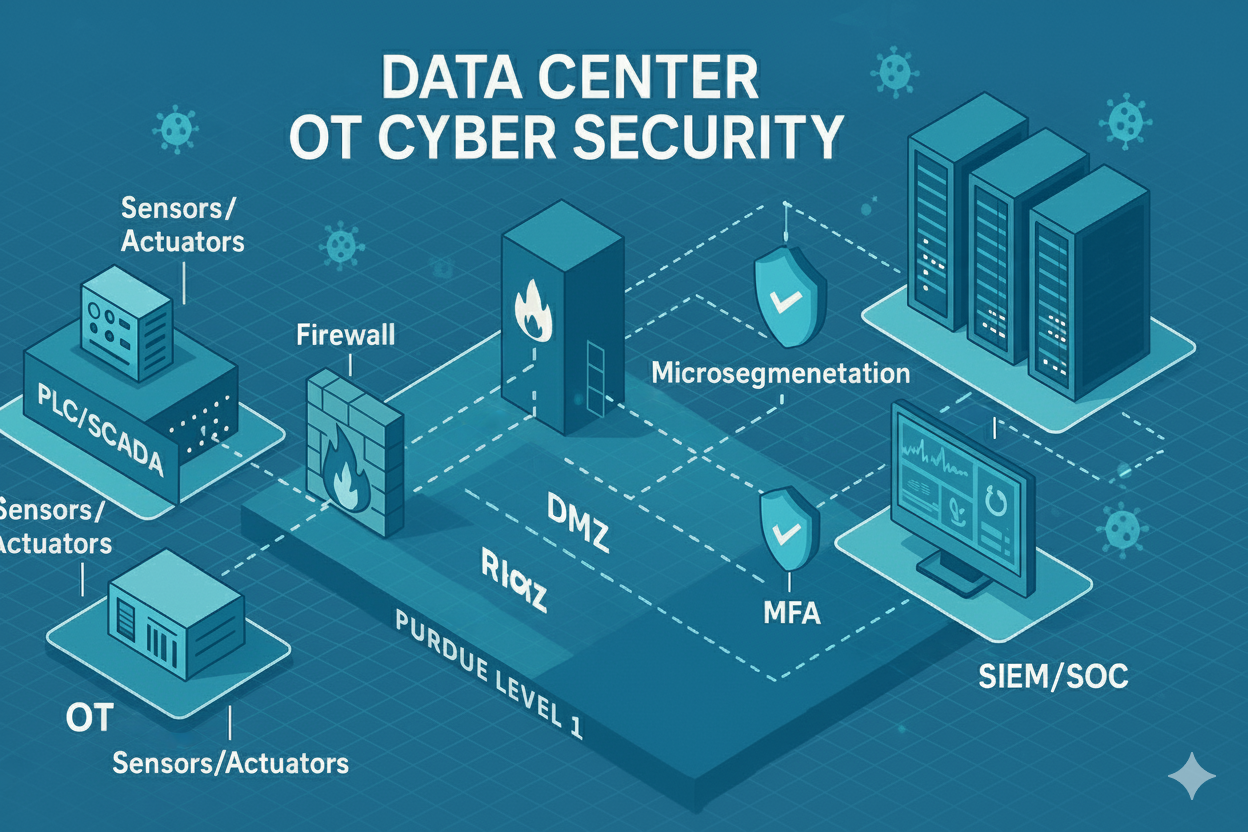
  • Microsegmentation: zone-based segmentation aligned to Purdue levels, BMS/EPMS zones, and default-deny allow-lists.
  • Continuous verification: posture, policy, behavior, and OT-aware monitoring with east-west visibility.
  • Compensating controls for legacy systems: protocol allow-lists, gateways, and data diode options where required.
  • Controlled patch and change strategy: virtual patching, golden images, and restore drills for resilient operations.
  • Supply-chain controls: signed firmware, SBOM-aware processes, and time-bound vendor access with auditability.

Bottom line: In modern data centers, OT is mission-critical. Zero Trust reduces blast radius, prevents silent lateral movement, and makes third-party and legacy access safer for 24×7 operations.

Network Cloaking
Makes critical OT systems such as power, cooling, environmental, access control, BMS, and UPS effectively invisible to unauthorized probes.

Blocks manual and AI-assisted reconnaissance to reduce attack surface.

Protects legacy and unpatchable devices by hiding them from scans and unsolicited access.

Secure Remote Access
Enables passwordless MFA using biometric or device identity controls to reduce phishing and credential risk.

Provides least-privilege, time-limited access for maintenance teams and vendors.

Uses secure encrypted tunnels and software-defined perimeter access paths to isolate remote sessions.

Network Segmentation / Micro-Segmentation
Uses software-defined segmentation to isolate devices, applications, services, and protocols.

Prevents lateral movement and limits breach propagation.

Supports compliance and separation of critical OT and IT environments without major re-architecture.

Uptime & Compliance Benefits
Helps maintain high operational availability by protecting power, cooling, and environmental controls from cyber-driven disruption.

Produces audit trails and reporting to support security, safety, and operational compliance objectives.

Reduces reputational and financial risk linked to outages, service interruption, and operational instability.

Proven Risk & Impact

Data & Statistics


Metric Highlights

  • Outage cost exposure: a significant share of OT-related outages result in losses above US$100,000, with some exceeding US$1 million.
  • Credential and phishing risk: identity compromise remains one of the most common initial access paths.
  • Industrial ransomware growth: ransomware continues to heavily impact industrial and operational environments.
  • Zero Trust relevance: strong identity, segmentation, and controlled remote access directly address common OT attack paths.

What This Means for DC-OT

  • Risk is proven and expensive: outages are frequent enough, operationally disruptive, and often preventable with stronger controls.
  • Impact is physical: attacks on OT environments can halt operations, not just expose data.
  • Attackers target edge and supply-chain pathways: VPNs, gateways, IPMI interfaces, and vendor endpoints must be hardened.

How It Works – Deployment Outline


1. Assessment & Discovery – map OT and IT environments and inventory power, cooling, security, and environmental assets.

2. Design & Policy Definition – identify systems to cloak, define access roles, and establish segmentation and remote access policies.

3. Pilot / Test Plan – deploy in a limited area such as a selected UPS, PDU, or cooling segment to validate performance.

4. Full Rollout & Validation – scale protections, enforce access controls, and verify policy coverage.

5. Monitoring, Auditing & Continuous Improvement – maintain alerting, audit trails, and periodic review cycles.

Your Advantages

Why Choose Our Solution


Why TOPSCCC + BlastWave

1) Make OT undiscoverable

  • Zero inbound exposure: no public-facing attack surface, no exposed VPN concentrators, and no open ports to scan.
  • Identity-based micro-tunnels: applications and devices remain unreachable until the correct user and device are verified.
  • Per-application allow-lists: every connection is just-in-time and least-privilege.

2) Safe access for legacy and mixed vendors

  • Gateway-based cloaking: protects PLCs, BMS, EPMS, serial bridges, IPMI/BMC, and other sensitive assets.
  • Protocol guardrails: supports allow-listing, read-only views, and controlled break-glass workflows.
  • No rip-and-replace: overlays existing infrastructure across fiber, MPLS, 4G, or 5G environments.

3) Strong, practical security

  • Passwordless MFA and device posture using certificate- or key-based trust.
  • Default-deny microsegmentation aligned with Purdue principles and supported by continuous verification and logging.
  • Inline virtual patching for shielding unpatchable or high-risk assets.

Client Advantages

  • Reduced attack surface to limit scanning, ransomware spread, and lateral movement.
  • Faster vendor operations with controlled task-based access.
  • Higher uptime through stronger containment around power, HVAC, and UPS controls.
  • Lower complexity by reducing dependence on VPN sprawl, jump hosts, and fragmented ACLs.
  • Audit readiness with session trails and structured evidence for compliance needs.
  • Local India support through TOPSCCC-led deployment and service alignment.

Bottom line: Your critical infrastructure becomes invisible by default and reachable only by the right identity for the right task.