
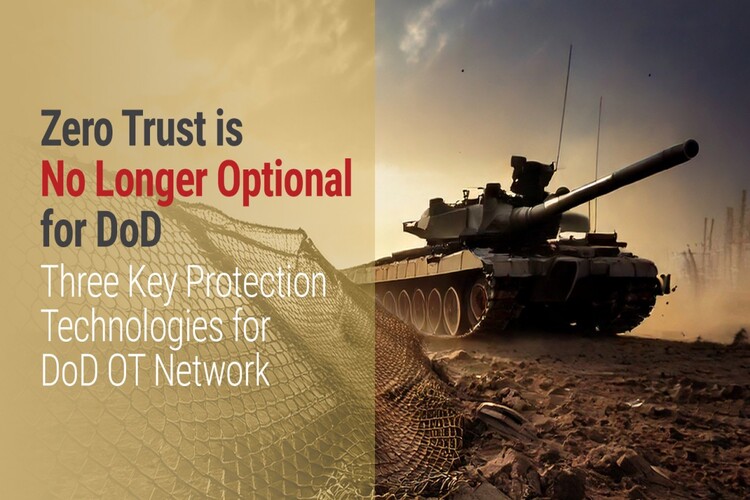
In today’s cybersecurity landscape, traditional perimeter-based defenses—like firewalls—are no longer enough, especially for mission-critical Operational Technology (OT) environments within the Department of Defense (DoD).
The Threat Has Evolved
A new wave of cyber threats is directly targeting the DoD’s aging OT infrastructure. Nation-state actors and advanced persistent threats are:
- Exploiting legacy systems that lack modern security controls
- Bypassing firewalls through lateral movement and phishing
- Launching stealthy attacks that remain undetected until damage is done
Simply put: firewalls were designed for a different era. The DoD is now facing adversaries that operate beyond their reach.
The DoD’s Response: Zero Trust for OT
To counter this threat, the DoD is shifting toward a Zero Trust architecture tailored for OT environments—where trust is never assumed, and every user, device, and connection is continuously verified.
This modern security model emphasizes three key technologies:
🔒 Secure Remote Access
Enable authorized access without exposing the network. Eliminate VPN vulnerabilities and prevent credential theft.
🕵️ Network Cloaking
Make OT assets invisible to unauthorized users—removing them from the attack surface entirely.
🔐 Microsegmentation
Isolate critical systems to stop attackers from moving laterally across networks. Even if one device is compromised, the threat is contained.
Why This Matters Now
The stakes couldn’t be higher. Whether it’s protecting national security, ensuring military readiness, or maintaining the resilience of supply chains, the DoD cannot afford downtime or data loss caused by preventable cyberattacks.
Zero Trust isn’t optional anymore—it’s essential.
📖 Read the full article on LinkedIn to see how the DoD is leading the shift:
Zero Trust is No Longer Optional for DoD
🔗 Learn more about how we support critical infrastructure with Zero Trust OT cybersecurity at BlastWave.com
Leave a Reply